Category Archives: General

Is the worst of Africa’s downturn really over?

Is the worst of Africa’s downturn really over?

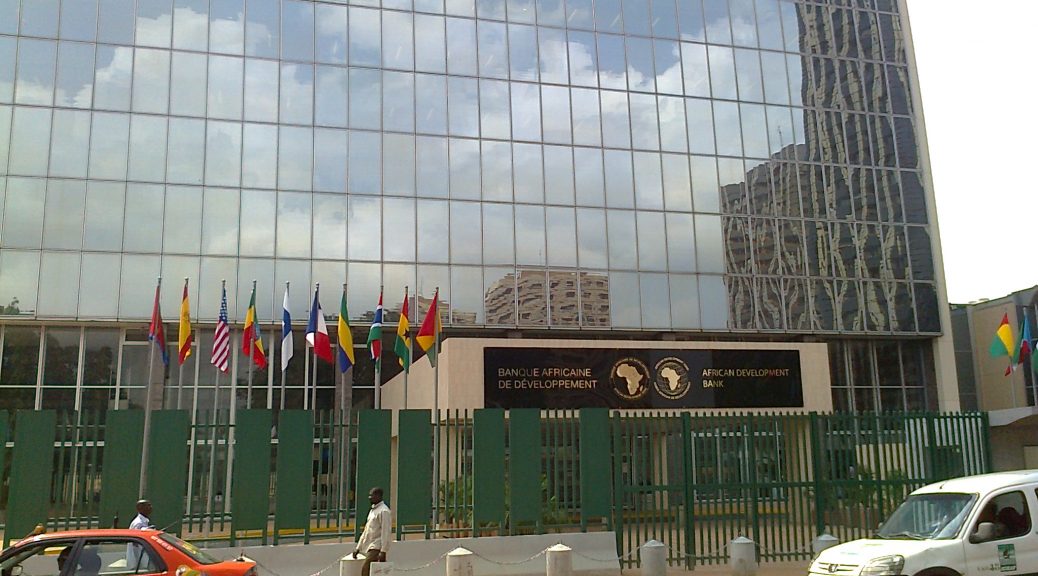
The president of the AfDB predicted that Africa’a economies will grow by 3,7 % in 2017, but some find this forecast overoptimistic.

The African Development Bank (AfDB) believes that Africa is over the worst of the economic downturn. As a big lender to African projects, it is obviously in the Bank’s best interests to talk up the continent’s economic prospects.

Speaking to Bloomberg in late September of 2016 AfDB president Akinwumi Adesina said “We have a situation of economic headwinds but African economies are quite resilient. We have 19 countries growing at 3- 5 % and 21 countries growing over 5 %. Afica isn’t falling apart. The ‘Africa Rising Story’ isn’t over”.

The AfDB forecasts continental growth of 3,5 % this year, rising to 3,7 % in 2017 and 4,2 % in 2018. There is therefore unlikely to be a return to the 6,8 % growth of sub-Saharan Africa averaged between 2003 and 2008 but the Bank does expect GDP to outpace the population rise, giving figures that can best be described as “modes”.

Whatever the rate of continental growth, the overall figure is almost certain to be dragged down by the two biggest economies in sub-Saharan Africa, with South-Africa stagnant and Nigeria in its first recession for a quarter of a century.

The IMF certainly does not agree with these projections. In October it cut its growth forecast for sub-Saharan Africa for 2016 to 1,4 %, which would be the lowest rate this century. The IMF’s breakdown of growth rates is particularly interesting. It forecasts an average of 0,3 % this year for the resource rich countries, while those without such natural resources will grow by an average if 5,6 %.

Source: African Business, December 2016

Facebooktwitterredditpinterestlinkedinmail

Africa Mobile Subscriptions hits 725 million

Nigeria, Egypt, South Africa Top List

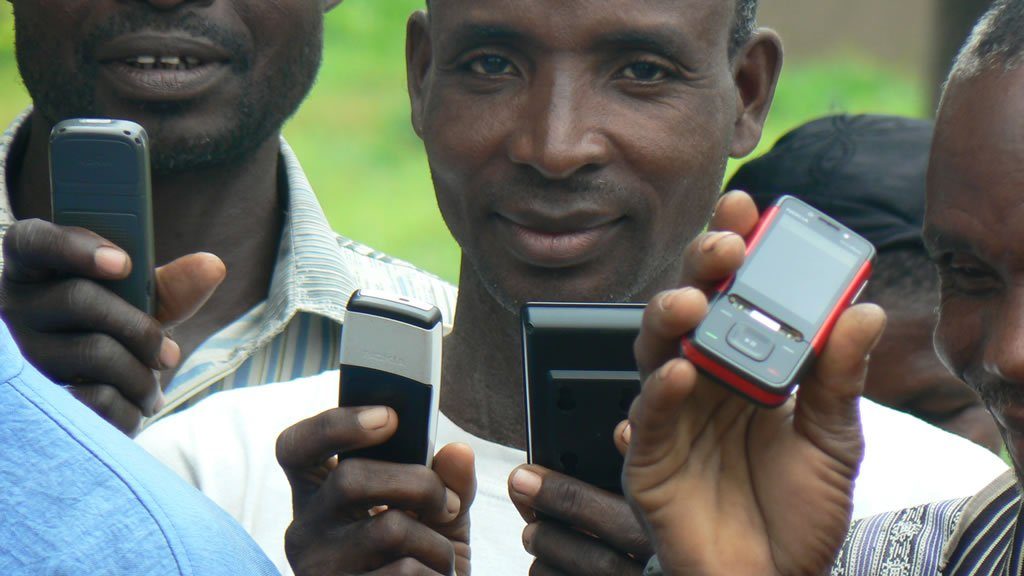
The ongoing GSMA 360 Africa Mobile Conference holding in Dar Es Salaam in Tanzania, has predicted that mobile subscription in Africa would reach 725 million in 2020, up from its current penetration level of 500 million, with Nigeria, Egypt and South Africa, topping the list of highest number of mobile subscription on the African continent.

Nigeria’s mobile subscription, which currently stands at over 160 million, has been adjudged as the fastest growing telecoms market in Africa and the world.

Director General, GSMA Mobile 360 Series, Mr. Mats Granryd, who announced the growth rate of mobile subscription in Africa, said the forecast to reach 725 million by 2020, accounted for 54 per cent of the expected population of Africa.

The prediction, he said was hinged on some trends that are currently driving mobile subscription in Africa.

“African mobile subscribers are rapidly migrating to mobile broadband networks and services, a result of ongoing network rollouts and the increasing availability of affordable mobile broadband devices and tariffs. Mobile broadband (3G/4G) accounted for just over a quarter of total connections at the end of 2015, but is expected to account for almost two-thirds by 2020,” Granryd said.

According to him, by mid2016, there were 72 live 4G networks in 32 countries across Africa, half of which have launched in the last two years. The number of smartphone connections in Africa is forecast to more than triple over the next five years, rising from 226 million in 2015 to 720 million by 2020, Granryd added.

The predictions were the outcome of a recent research carried out by GSMA 360 Africaand made public in Tanzania.

According to the report, mobile’s contribution to African GDP, Jobs and public funding, were expected to rise.

The use of mobile technologies and services across Africa, generated $153 billion in economic value last year, equivalent to 6.7 per cent of the region’s GDP. The contribution, according to Granryd, would increase to $214 billion by 2020, which is 7.6 per cent of expected GDP as countries in Africa continue to benefit from the improvements in productivity and efficiency brought about by increased take-up of mobile services. The report said Africa’s mobile ecosystem also supported 3.8 million jobs in 2015 and made a $17 billion contribution to the public sector via general taxation. The number of jobs supported is forecast to rise to 4.5 million by 2020, while the tax contribution is expected to increase to $20.5 billion.

The report also explains how mobile is powering innovation and entrepreneurship across Africa. It notes that there are now approximately 310 active tech hubs across the region, including 180 accelerators/ incubators. Mobile operators are supporting this ecosystem by opening up new services to third-party developers in areas such as messaging, billing, location and mobile money, which has allowed start-ups to scale quickly.

Source: Thisday, 28th July, 2016

Facebooktwitterredditpinterestlinkedinmail

Africa’s phone users reach 700 million

Mobile phone subscriptions are now almost eight times higher in Africa than in 2000, reaching about 700 million. According to a new report by the International  Telecommunications Union, mobile technology has played a crucial role in promoting financial inclusion in sub Saharan Africa, where fewer than 20 per cent of households have access to formal financial services. … Mobile phone banking services are especially prevalent in Kenya and penetration rates are also relatively high in Uganda and Tanzania. The other countries with high mobile money account penetration rates are Côte d’Ivoire, Zimbabwe, Botswana, Rwanda and South Africa.

Regulaory reforms and liberalization have also benefited local mobile operators, with countries such as Ghana, Nigeria and Tanzania having more than five local operators.

The report said sub Sahara Afric’s greatest development change is to move from an economic growth path based on commodity exports to a more sustainable industrial and services path. The mobile technology revolution can support and underpin this economic diversifications, experts say.

Source: African Courier, June/July 2016

Facebooktwitterredditpinterestlinkedinmail

The long view for Africa

While many question Africa’s achievement over the last decade, there is a greater perspective needed to show how far Africa has just come.

Certainly, Africa is not monolithic –   it’s 54 Africas –   but just if you count up the GDP figures for the whole continent, it averages 5 % growth per year over that period, according to the world bank –   a strong long term position that is well above the global average of 3 % over the last decade..

Since 2000, Africa has also seen a 200 % increase in intra-continental trade and trade with the rest of the world. Fast forward, Africa continues to house some of the world’s fastest growing economies and despite the recent collapse in commodity prices, private equity investment grew by 51 % last year.

At least a dozen economies have grown by more than 6 % per year for six years or more.

Source: AI, May 2016

Facebooktwitterredditpinterestlinkedinmail

African startups need foreign investment – booming middle class

Nigeria’s population will be over 440m by 2050

Historically, fast growing African tech companies needing an immediate capital injection would have to reach out to foreign investors for this funding.

The need for investment, whether foreign or domestic, is crucial to both established an startup technology companies in Africa.

As most companies are unprofitable for a couple of years, capital is required to disrupt the current status.

Positive trends

The changing demographics in most African countries are helping consumer focused technology companies to reach better sales figures. A perfect storm of increasing smartphones penetration, improving disposable income and the rise of a highly connected younger generation is boosting this sector

Positive trends

There are almost 1bn Africans on the continent; millions are coming online each week, almost via the mobile, which is what’s driving demand. Soon, there will be more than 400m smartphones on the continent. The mobile is the most powerful communications and technology tool on the continent.

It is no surprise that many successful tech startups are based in Nigeria, Based on current projections, Nigeria’s population is forecast to grow to over 440m by 2050 and see a rapidly increasing middle-class population, with commerce spending in the country on track to total $8bn by 2025-

One thing is for sure – this is only the beginning of Africa’s tech boom.

Source: African Business, May 2015

Facebooktwitterredditpinterestlinkedinmail